
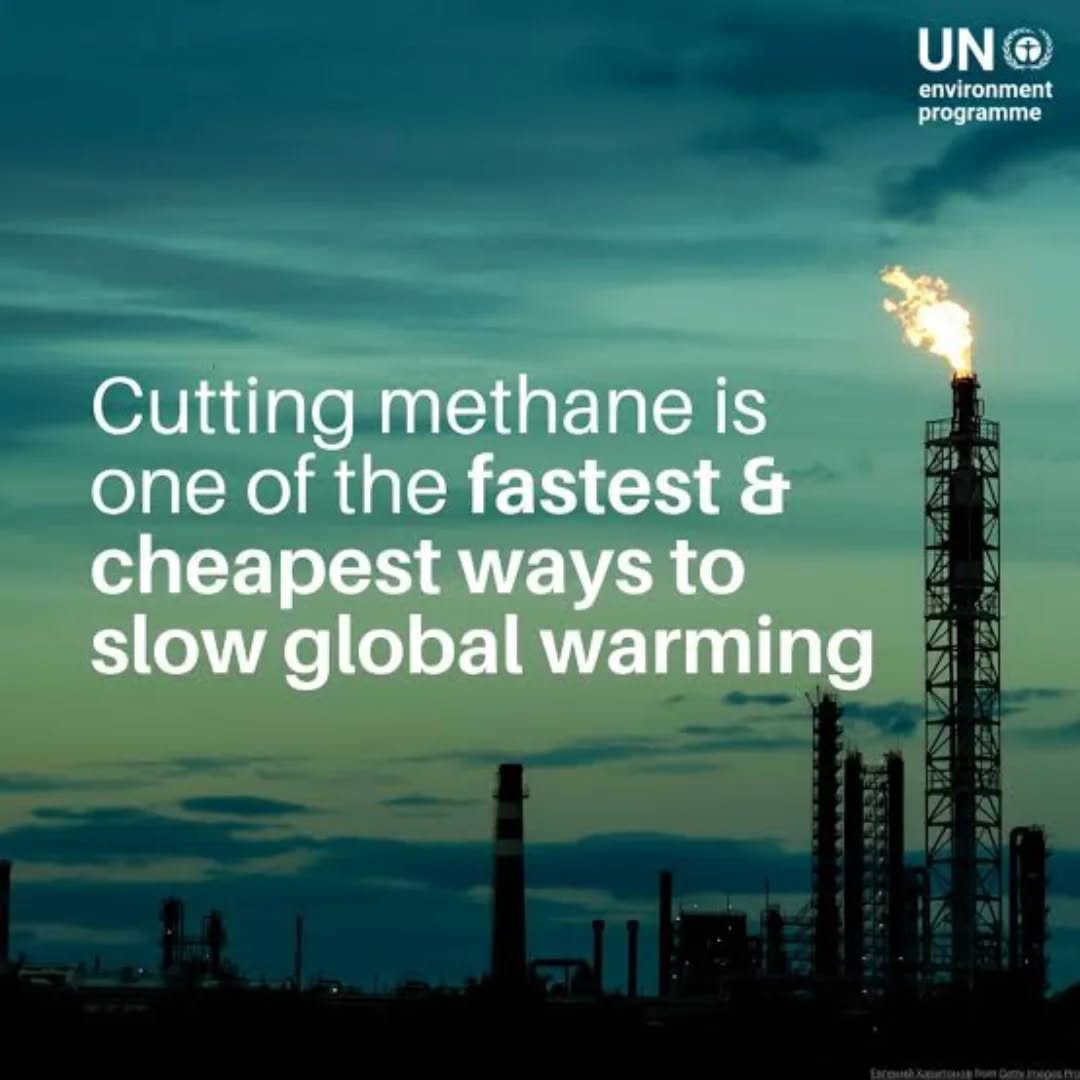
“Cutting methane emissions is the fastest, most cost-effective way to slow near-term global warming, because methane traps over 80 times more heat than carbon dioxide over a 20-year period but breaks down in the atmosphere in roughly a decade.
Why It Matters Now?
Immediate climate impact: Methane drives roughly one-third of current global warming. Cutting human-caused emissions nearly in half could shave about 0.3°C off near-term warming, helping keep temperature overshoot below critical limits.
Air quality and health: Reducing methane limits ground-level ozone formation, preventing hundreds of thousands of premature deaths annually.
High economic return: According to the UN Environment Programme, many reductions pay for themselves—especially in energy and waste—because captured methane can be sold or used as fuel.
———————————–
Top Strategies by Sector:
———————————–
▪︎ Agriculture Sector (~40% of Human Emissions)
Primary Sources:
Livestock digestion (enteric fermentation), manure lagoons, flooded rice paddies
Proven Mitigation Solutions:
Feed additives (red seaweed, 3-NOP) that cut livestock burps by 30–90%, alternate wetting and drying in rice fields, and anaerobic manure digesters.
———————————–
▪︎Fossil Fuel Sector (~35% of Human Emissions)
Primary Sources:
Oil and gas leaks, routine flaring and venting, abandoned wells, coal mines
Proven Mitigation Solutions:
Satellite and sensor leak detection, repairing faulty valves/pipes, banning routine flaring, and sealing abandoned wells. Over 75% of oil and gas emissions can be cut with existing tech.
———————————–
▪︎Waste Sector (~20% of Human Emissions)
Primary Sources:
Decomposing food and organic matter in open dumps and landfills
Proven Mitigation Solutions:
Diverting food waste to compost, installing landfill gas-capture systems to generate electricity or heat, and closing open dump sites.
———————————–
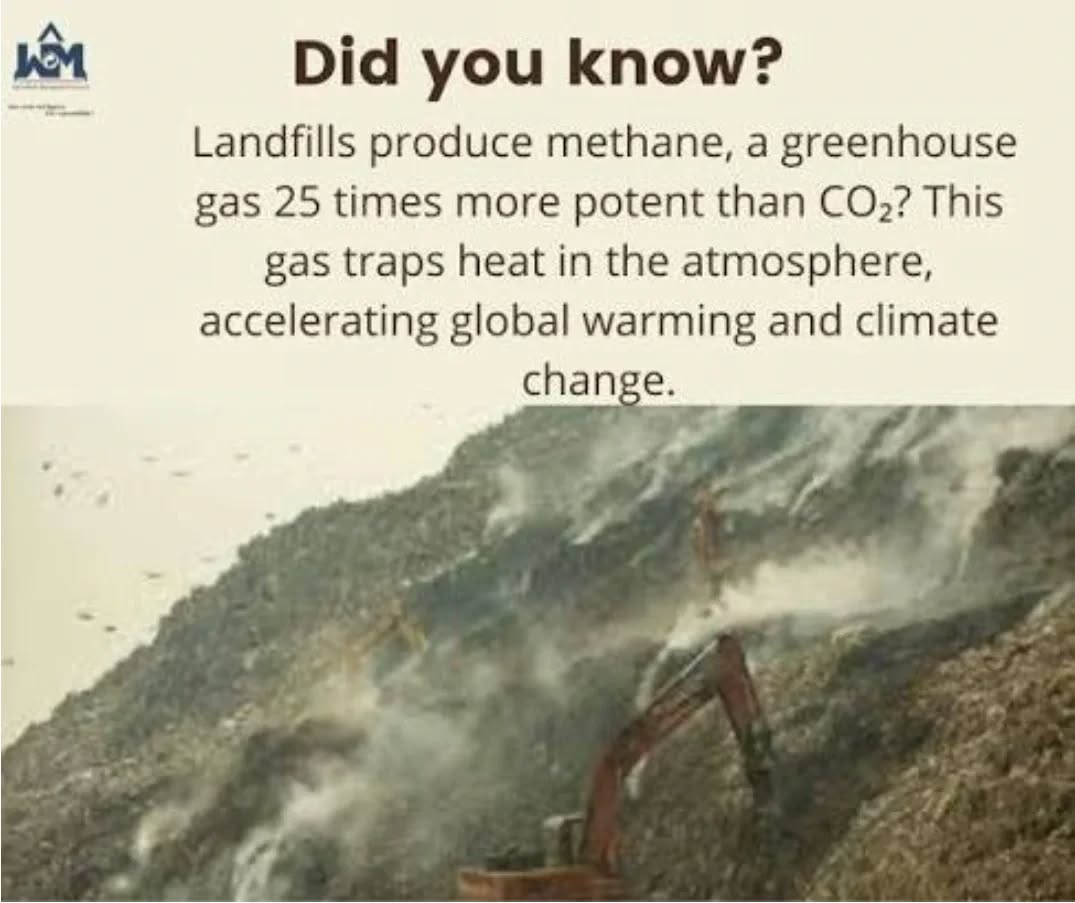
If and when the landfills are cleared, how will we manage our waste?


What are the solutions?

To be continued…
———————————–