
“To achieve net zero greenhouse gas emissions by 2050 and limit global warming to 1.5°C, global net human-caused emissions must be reduced by approximately 45% by 2030 from 2010 levels … and then reach net zero by 2050. This reduction requires cutting emissions as close to zero as possible and balancing any remaining emissions through carbon removal.
What does ‘Net Zero’ Mean?
Net zero is achieved when the amount of greenhouse gases (GHGs) released into the atmosphere is equal to the amount removed.
This balance is reached through a two-pronged approach:
• Reducing emissions: Minimizing the human-caused emissions from sources like fossil fuel combustion and industrial activities.
• Removing emissions: Balancing remaining emissions by actively removing GHGs from the atmosphere, either through natural methods (like forest restoration) or technological solutions (like direct air capture).
Why This Reduction is Necessary:
• To avoid the worst climate impacts: The scientific consensus is that limiting global temperature rise to 1.5°C above pre-industrial levels is crucial to prevent severe climate change.
• To keep the Paris Agreement goals: This reduction target was established as part of the Paris Agreement to achieve climate goals and ensure a more sustainable future, according to the United Nations.
• To stop global warming: Global warming is directly proportional to cumulative CO2 emissions, so the planet will continue to heat up as long as emissions remain above zero.” (AI Overview)
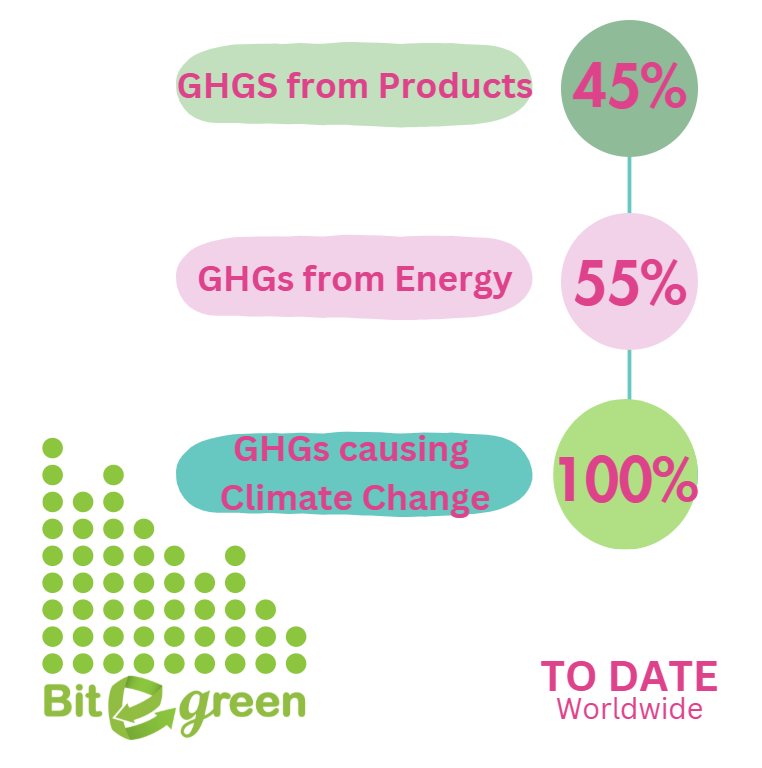
Of all the CO2 emitted around the world, 55% comes from the energy sector and the remaining 45% comes from the way we produce our goods (i.e. all the materials that go into making them), and how we manage our land.” (REF: EllenMcArthurFoundation)
Carbon dioxide (CO2) vs. Methane (CH4):
“While carbon dioxide (CO2) is a major player in climate change, methane (CH4) is a much more potent greenhouse gas in the short term, and reducing methane emissions can have a faster impact on slowing global warming. Although CO2 persists in the atmosphere for centuries, methane’s impact is felt much more quickly due to its higher warming potential. Cutting methane emissions is therefore a crucial and immediate strategy to mitigate climate change.
Here’s why this matters:
Methane’s Potency:
Over a 20-year period, methane is estimated to have a global warming potential more than 80 times that of CO2.
Short-Lived but Powerful:
While methane’s atmospheric lifetime is shorter than CO2, its impact on warming is more immediate and significant in the near term.
Faster Impact:
Reducing methane emissions can lead to a quicker reduction in the rate of global warming, providing a more immediate benefit than focusing solely on CO2 reductions.
Human-Caused Emissions:
Major sources of methane include fossil fuel production, agriculture, and waste management.
Global Methane Pledge:
Many countries have pledged to reduce methane emissions by 30% by 2030, primarily by addressing leaks from oil and gas operations, according to the Environmental Defense Fund.
Multiple Benefits:
Reducing methane emissions not only slows climate change but also improves air quality, reduces health problems, and boosts agricultural yields.
AI Adoption:
Increased AI energy use is a significant concern for achieving net-zero goals, as it drives demand for electricity from data centers, which is already a growing source of emissions. While AI adoption is increasing data center energy consumption, it also offers the potential for energy savings across various sectors through improved efficiency and innovation. The net impact on emissions depends on whether the widespread adoption of AI for energy reduction and efficiency can offset the energy demands of AI infrastructure itself, a complex challenge requiring significant collaboration and technological advancements.
The Net-Zero Equation: Balancing the Scales
Net-Zero Impact is Uncertain:
The overall impact of AI on net-zero goals is not yet clear and depends on a complex interplay of energy consumption and efficiency gains.
Need for Clean Energy:
Meeting the increased electricity demand from AI-driven data centers with renewable energy sources is crucial to avoid exacerbating climate change.
Strategic Deployment:
To achieve a net-positive outcome for AI in achieving net-zero, there needs to be a significant focus on widespread adoption of AI applications that yield large emissions reductions and overcome barriers to their implementation.” (AI Overview)
“FUN FACT: Energy efficiency is one of the most effective water conservation strategies there is.” ~ (@ CaribbeanAccelerator)